Posts

"Unlocking Data Transformation: Migrating from SAP HANA to Snowflake"

Image
 In today's rapidly evolving data landscape, businesses increasingly rely on cutting-edge solutions to harness the full potential of their data. SAP HANA, a high-performance in-memory database, has long been a stalwart choice for enterprises. However, as organizations shift toward cloud-based data warehousing, Snowflake emerges as a formidable contender. This article explores the significance of migrating from SAP HANA to Snowflake , the advantages it offers, and the strategies for a seamless data transition.   Why Migrate from SAP HANA to Snowflake? 1. Cloud-Native Architecture Snowflake is born in the cloud and designed for the cloud. It provides a highly scalable and flexible data warehousing solution that seamlessly integrates with popular cloud providers like AWS, Azure, and Google Cloud. This cloud-native approach eliminates the need for on-premises infrastructure and offers greater agility.   2. Scalability Snowflake's unique multi-cluster, shared da...
Streamlining Data Management and Ensuring Reliability

Image
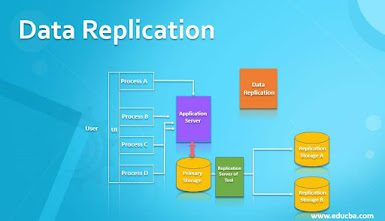
   In the digital age, data is the lifeblood of organizations, driving decision-making, operational efficiency, and innovation. However, as data volumes continue to surge, ensuring its availability, integrity, and accessibility across various systems and locations becomes increasingly challenging. This is where replicating software emerges as a game-changer. In this article, we'll delve into the transformative world of replicating software , exploring its significance, benefits, and how it's reshaping data management.   The Significance of Replicating Software   Replicating software, also known as data replication software, plays a pivotal role in modern data management for several compelling reasons:   Data Availability: Replicating software ensures that data is continuously copied and available across multiple systems, minimizing downtime and ensuring uninterrupted access to critical information.   Data Integrity: By maintaining consist...

Ensuring Data Availability and Consistency

Image
 In the dynamic landscape of data management, ensuring data availability and consistency is paramount for the success of any organization. As a third-party observer, we delve into the world of data replication solutions, exploring their significance, benefits, and how they contribute to maintaining data integrity and accessibility.   Understanding Data Replication Solutions   Data replication solutions refer to technologies and strategies designed to duplicate and synchronize data across different systems, databases, or locations. The primary goal is to ensure that data remains consistent, accurate, and available to users, applications, and processes whenever needed.   Importance of Data Replication   In today's data-driven world, organizations rely heavily on accurate and up-to-date data for decision-making, analytics, reporting, and more. Data replication solutions play a critical role in addressing various challenges and requirements:  ...

Bridging the Gap: Oracle SQL Server Comparison - A Third-Party Perspective

Image
Introduction:  In the realm of database management systems, two juggernauts stand tall: Oracle and SQL Server. Both are industry-leading platforms, each offering unique strengths and features. As an impartial observer, we delve into the world of Oracle SQL Server comparison to shed light on their functionalities, benefits, and how businesses can leverage these powerful databases to meet their data management needs.   Understanding Oracle and SQL Server: Before delving into the comparison, let's briefly understand what Oracle and SQL Server bring to the table:   Oracle: Oracle, developed by Oracle Corporation, is a versatile and highly robust database management system. It boasts exceptional scalability, making it an ideal choice for large enterprises and organizations with vast amounts of data. Oracle is known for its reliability, security, and support for complex data structures and operations.   SQL Server: SQL Server, on the other hand, is a p...

PostgreSQL to Snowflake: Streamline Data Integration for Advanced Analytics

Image
 Introduction: The integration of data from multiple sources is crucial for organizations aiming to gain valuable insights and make data-driven decisions. In this regard, moving data from PostgreSQL, a popular open-source relational database management system, to Snowflake, a cloud-based data warehousing platform, can be a game-changer. This article explores the benefits and features of integrating PostgreSQL with Snowflake, highlighting the seamless data migration, advanced analytics capabilities, and scalability provided by this powerful combination.   Seamless Data Migration: Moving data from PostgreSQL to Snowflake is a seamless process that ensures data consistency and accuracy. Snowflake provides robust connectivity options and native support for PostgreSQL, enabling organizations to easily extract data from their PostgreSQL databases and load it into Snowflake. The migration process maintains the integrity of the data, preserving the relationships, structure, a...

Oracle Database Replication: A Comprehensive Guide to Data Synchronization

Image
Oracle database replication plays a crucial role in ensuring data availability, reliability, and disaster recovery for organizations relying on Oracle databases. In this article, we will delve into the intricacies of Oracle database replication and explore the benefits it offers for data synchronization. Data Redundancy and High Availability: Oracle database replication allows you to create redundant copies of your data across multiple nodes or servers. This redundancy ensures high availability by enabling continuous data access even in the event of hardware failures or system outages. With replication, you can distribute your data across geographically dispersed locations, providing resilience and minimizing the risk of data loss or downtime. Improved Performance and Scalability: Replicating an Oracle database can significantly improve performance and scalability. By distributing data across multiple nodes, you can offload read-intensive operations to replica databases, reduc...

Oracle Database Replication: Ensuring Data Availability and Integrity

Image
  Introduction: In today's digital landscape, businesses rely on efficient and reliable data replication to ensure data availability, enhance disaster recovery capabilities, and support real-time reporting and analytics. Oracle database replication is a powerful solution that enables organizations to duplicate their Oracle database and distribute data across multiple systems. In this article, we will explore the benefits and functionality of Oracle database replication and how it empowers businesses to achieve high data availability and integrity.   Data Redundancy and High Availability: Oracle database replication provides data redundancy by creating identical copies of the database on separate systems. This ensures that even if one system fails, the replicated database can continue to serve data, minimizing downtime and ensuring high availability. By distributing data across multiple systems, businesses can achieve fault tolerance and eliminate single points of fail...

Streamlining Data Integration with ETL in AWS: A Comprehensive Guide

Image
Introduction: In today's data-driven world, organizations need efficient and reliable methods to integrate and transform their data. ETL (Extract, Transform, Load) plays a vital role in this process, enabling businesses to extract data from various sources, transform it into a usable format, and load it into a target destination. AWS (Amazon Web Services) offers a robust ETL solution, empowering organizations to seamlessly integrate and manage their data. In this article, we'll explore the benefits and best practices of ETL in AWS . What is ETL in AWS? ETL in AWS refers to the process of extracting data from different sources, transforming it into a consistent format, and loading it into AWS data services or other target destinations for analysis, reporting, or storage. AWS provides a suite of services, such as AWS Glue, AWS Data Pipeline, and AWS Database Migration Service (DMS), that simplify and automate the ETL process. Benefits of ETL in AWS: Scalability: AWS off...

A Comprehensive Guide to AWS ETL Options for Efficient Data Management

Image
 Introduction: AWS ETL (Extract, Transform, and Load) options are a set of services and tools offered by Amazon Web Services (AWS) to help businesses manage and move data between various data sources and destinations. These tools are designed to simplify the process of extracting data from different sources, transforming it into a suitable format, and then loading it into a target data store or analytics platform. In this article, we will explore some of the popular AWS ETL options and their features. AWS Glue: AWS Glue is a fully-managed ETL service that makes it easy to move data between various data stores. It can crawl data sources, automatically generate ETL code, and load the transformed data into target data stores or data warehouses. AWS Glue supports a wide range of data sources including Amazon S3, Amazon RDS, and Amazon Redshift, and allows users to run ETL jobs on a schedule or on-demand. It also integrates with AWS Lambda, enabling users to perform custom transfo...

How to Replicate Oracle Data to SQL Server

Image
Replicating data from Oracle to SQL Server can be a challenging task, especially if you're dealing with a large and complex database. However, with the right tools and strategies, you can ensure a smooth and efficient replication process. This article outlines the steps you need to follow to Oracle replication to SQL server Step 1: Choose the Right Replication Tool There are several replication tools available for migrating data from Oracle to SQL Server. Some popular options include Oracle GoldenGate, SQL Server Integration Services (SSIS), and Attunity Replicate. Each tool has its own strengths and weaknesses, so it's important to choose the one that best fits your requirements and budget.   Step 2: Configure Oracle as the Source Database   Once you have selected your replication tool, you need to configure Oracle as the source database. This involves creating a user account with sufficient privileges to access and replicate the data. You also need to specify the tab...

An Overview of AWS ETL Tools and How to Choose the Right One

Image
Extract, Transform, Load (ETL) is an essential process for any organization that deals with large volumes of data. AWS offers a range of ETL tools that can help you extract data from various sources, transform it, and load it into AWS services for analysis and storage. In this article, we'll provide an overview of AWS ETL tool and how to choose the right one for your needs. AWS Glue is a fully managed ETL service that enables you to extract data from various sources, including Amazon S3, JDBC, and Amazon RDS. It also provides a visual editor for creating ETL jobs and a built-in Apache Spark engine for data processing. With Glue, you can transform and load data into Amazon Redshift, Amazon EMR, and other AWS services. AWS Data Pipeline is another ETL service that enables you to move and transform data across AWS services and on-premises environments. It supports various data sources and destinations, including Amazon S3, DynamoDB, RDS, and Redshift. Data Pipeline also provides ...

The Functioning of AWS DMS Services

Image
AWS DMS (Amazon Web Service Database Migration Service) is based in the cloud and facilitates the migration of databases between data warehouses, relational databases, and NoSQL and relational databases. While migrating with AWS DMS services , ensure that at least one of the source and the target databases is in the cloud. Functioning of AWS DMS Services There are three ways that AWS DMS services function for database migration. ü Full-load database migration: Both the source and the target database are shut down and the database is migrated from the source to the target in one shot. ü Ongoing database migration: The source and the target databases are always kept in sync and after the full data migration is completed, changes at the source or incremental data are migrated to the target at pre-set intervals. ü Change Data Capture: Only the changes to the data at the source are migrated to the target database. Businesses need to choose the right AWS DMS services that ...

What is the ETL Tool of Amazon Web Service

Image
AWS (Amazon Web Service) is a platform that is based in the cloud and offers several cutting-edge services. These include infrastructure as a service, platform as a service, and packaged software as a service. Among the other key services are facilitating database migration from on-premises systems to the cloud, one cloud provider to another, relational databases, data warehouses, and NoSQL databases. To carry out this activity, the most efficient resource is the ETL tool for AWS . Before going into the various benefits of using the ETL tool for AWS, it is necessary to understand how this Extract, Transform, Load (ETL) process works. There are three stages here. First, the ETL tool extracts data from the source database, then transforms it to a structure that matches one that is supported by the target database, and finally, loads the processed data into the intended database.   Click here for more information about the ETL tool for AWS. Benefits of Using the ETL Tool for ...

Why Should You Migrate Databases Using Amazon DMS

Image
Businesses today look to migrate databases to high-efficient cloud-based platforms to increase operational efficiencies. One way is to move to Amazon Web Services (AWS) using their Database Migration Service (DMS). During migration with Amazon DMS , the source database remains fully functional and there is no need for downtime, a boost for large organizations as shutting down systems affects their operating schedules. Amazon DMS for database migration is perfect for both Homogeneous Migration such as Oracle to Oracle and Heterogeneous migration like Microsoft SQL Server or Oracle to Amazon Aurora. It can also replicate data continuously for consolidating databases into a data warehouse with petabyte-volume data streamed to Amazon S3 and Amazon Redshift. Click here for information about Amazon DMS Why should you migrate databases using Amazon DMS? With Amazon DMS, there is no need to install and configure additional drivers and applications for database migration as the same is...

The Functioning of the AWS ETL tool

Image
The Amazon Web Service (AWS) is a cloud-based platform that, along with other technologically advanced activities, facilitates the migration of databases from on-premises servers to the cloud and between cloud providers through its Database Migration Service (DMS). And the most popular and optimized method, in this case, is using the AWS ETL tool.   ETL is short for Extract Transform, and Load. There are three stages to the functioning of the AWS ETL tool for database migration. First, the data is extracted from the source database by the tool. Next, it transforms the data structure to one that is supported by the target database. Finally, the formatted data is loaded into the intended database. A great advantage of using the AWS ETL tool is that the data has all the attributes of a cloud-based service such as stringent data security, data flexibility, speed to market, and most critically, cost efficiencies. One of the major benefits of using the AWS ETL tool for database migrati...

Why Should You Use Database Replicating Software

Image
  Replication is the process of copying data from a database or a centralized warehouse to another storage repository. The source from where the data is moved is called the publisher and the point to which it is moved by the replicating software is known as the subscriber. Since the data is only replicated at multiple locations, all users have access to the same day regardless of whether it is situated in the publisher or the subscriber. Typically, a file server called the disconnected subscriber links a subscriber to a remote location or a laptop. Now, why should you use replicating software? In the modern data-driven business environment, there is a need to have copies of their database as protection from data breaches or data loss. Even though the simple procedure is to have a snapshot of the database and store it, this solution does not take into account changes in the data occurring continually in the source database and hence, the backup is not updated. In such circumstanc...

The Functioning of the Amazon Database Migration Service

Image
AmazonDMS ( Database Migration Service) is an optimized cloud-based service that facilitates the migration of data between various types of source and target databases. These include on-premises servers to the cloud, one cloud provider to another, and between relational databases, data warehouses, NoSQL databases, and more. Using this service, organizations can either choose a single snapshot data migration or continuous movement of data between the source and the target databases provided both are continually kept in sync.  For data migration to function optimally with Amazon DMS, there are two pre-conditions that have to be fulfilled. The first is that a link has to be made between the source and the target database so that the software knows from where the data has to be moved and to which data storage repository. Once this step is done, select the activity that will load the data from the source to the target. After these steps are defined, Amazon DMS automatically initiates...